

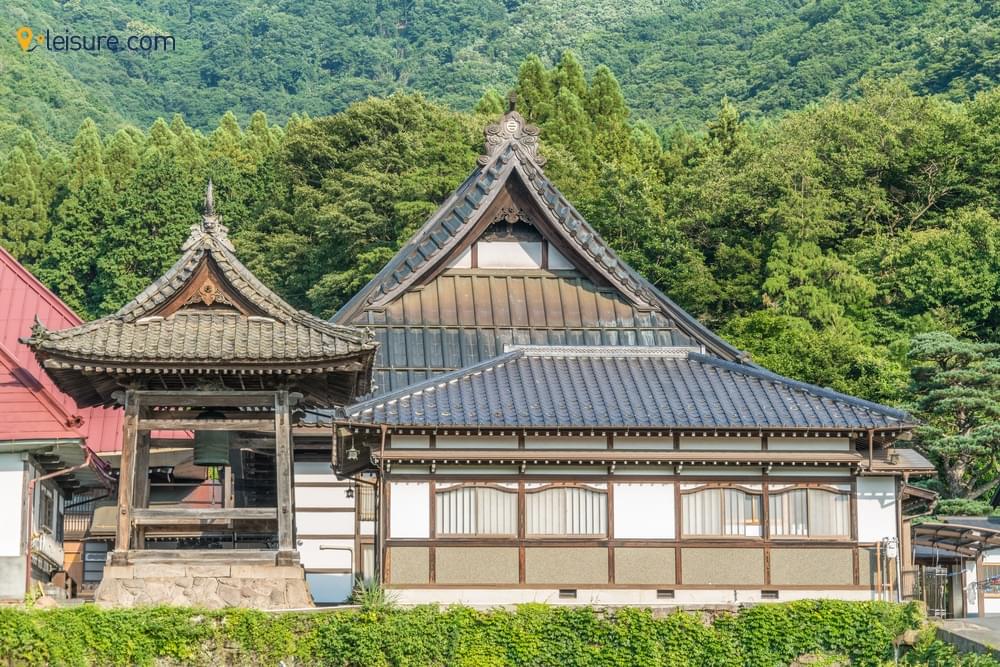
In Japan, traveling through time is as easy as boarding a train. On this 14-day luxury Japan tour, not only are you a student of Japan’s history, culture, and religion, but an active participant as each day takes you further back into the past. Sample cuisine from chefs whose recipes have not changed in centuries, and witness religious rites that predate the European Middle Ages. Every experience serves as your teacher; one whose lessons last a lifetime.
Stay at traditional inns and a Buddhist monastery deep in the Japanese mountains
Learn first-hand the secrets of Japanese art and design from master artisans
Explore a 250-year-old sake brewery followed by an exquisite tasting
Ride the famous Shinkansen, the Japanese Bullet Train, which is one of the fastest trains on Earth
Visit the Todaiji Temple, the largest wooden structure in the world
Explore both the ancient customs of the secluded Takayama, as well as the futuristic attractions of Tokyo
Dine at the finest 3-Michelin star restaurants in Tokyo and Kyoto
(Day 1): Tokyo – Arrival and Welcome Dinner
(Day 2): Tokyo – A Mix of Modern and Ancient
(Day 3): Obuse – Witness Traditional Art and Serene Nature
(Day 4): Narai – Your First Steps on the Nakasendo Trail
(Day 5): Magome – Travel the Trail
(Day 6): Takayama – Where the Present Is Still the Past
(Day 7): Takayama – Let Down Your Hair
(Day 8): Kyoto – Arrive at the Ancient Capital
(Day 9): Kyoto – Immerse Yourself in Japan’s Religious History
(Day 10): Kyoto – Take a Walk Through the Past
(Day 11): Nara – Get to Know Japan’s First Capital
(Day 12): Mount Koya – Experience Japan’s Religious Roots First Hand
(Day 13): Tokyo – Return to the Present Day
(Day 14): Tokyo – Sayonara!
Central Japan is a region known for its tall mountains, deep valleys, and rushing rivers. Many of the villages and towns in this region are untouched by the technological progress and fast-paced life in the big cities. Beginning in futuristic Tokyo, each stop on your journey sends you further into the past.
In feudal times, people traveling from Tokyo and Kyoto used the Nakasendo trail, an ancient highway running through the Japanese Alps. As you make your own journey from Tokyo to Kyoto by train, you become part of this historical tradition, visiting preserved villages and staying at local inns, some of which have been run by the same family for multiple generations.
In the Hida region, you visit the castle town of Takayama, a city isolated for centuries by the mountainous terrain. In the city center, take a private lesson from artisans who produce some of the finest lacquerware, pottery, furniture, and sake found in Japan. Just outside the city is Hida no Sato, the Hida Folk Village. In this open air museum, wander freely through Edo Period homes, and even participate in hand making the traditional crafts that defined the era.
From the mountains, travel by train to Kyoto, the seat of Japan’s government for over 1,000 years. Like the emperors of centuries past, in Kyoto, you dine on the best cuisine Japan has to offer. The cultural treasures once reserved only for Japan’s political and religious leaders are at your fingertips, as well.
Nara, Japan’s capital during the 8th-century, is a quick train ride from Kyoto.
Nara’s ancient temples and shrines are a testament to the glory and influence of Japanese Buddhism. The city’s main attraction is the Todaiji Temple, the largest wooden structure in the world. Within its massive walls is a 49-foot high bronze Buddha, an architectural triumph that leaves you speechless.
Your last night before heading back to Tokyo is spent in a Buddhist temple lodging on one of Mount Koya’s eight summits. In the evening, wander among the thousands of ancient tombs and memorials in the Okunoin cemetery, the final resting place of monks who have called Mount Koya home since the 9th-century.
Along with the beautiful mountain landscapes and wonderful hot springs, each stop offers freshly made local cuisine, such as hida beef, miso bean paste, fresh tofu, and sansai-ryori, mountain vegetables harvested from the wild. Ideal for couples, this two-week tour is best taken in the fall or spring. Private guides fluent in English and Japanese are provided for you in every city.
This content was created by AI